Concrete contractor in Mountain View, CA - slabs built on solid ground
Premier Atherton Concrete builds driveways, patios, walks, steps and foundations for Mountain View homes, with the ground dug out, packed and sloped for drainage before our own crew pours.

How we pour concrete in Mountain View
We're a concrete contractor based in Atherton, and Mountain View is one of the cities we work in on the way into the South Bay, along with Sunnyvale and Cupertino. The neighborhoods on either side of Castro Street were mostly built between the late 1800s and World War II, so many of the driveways and walks we look at there have outlasted a few patch jobs and a lot of tree roots. Farther out, the ranch houses and newer homes bring their own calls: a patio that tips toward the back door, a flaking garage floor, a driveway that needs widening.
What moves the price here is mostly the size of the slab, how much old concrete has to come out, how easy it is to get a truck to the spot, how much base work the ground needs and the finish you pick, and I walk the job before giving you the estimate in writing. The schedule turns on the weather, on curing, the days the concrete needs to harden before it takes weight, and on whether the job needs a permit from the City's building department. You can usually walk on a new slab well before you can park on it. Any contractor working in Mountain View also needs a City business license, so it's fair to ask whoever you hire. On most lots here, the ground decides how the concrete holds up, so our crew digs out and packs the subgrade, the soil the slab sits on, and I check where your water runs so the new slab falls away from the house.
What we build for Mountain View homes
Concrete driveway building
Driveways near downtown often crack where roots lifted them, so we dig out the base, pack new fill and slope the slab toward the street.
Concrete patio construction
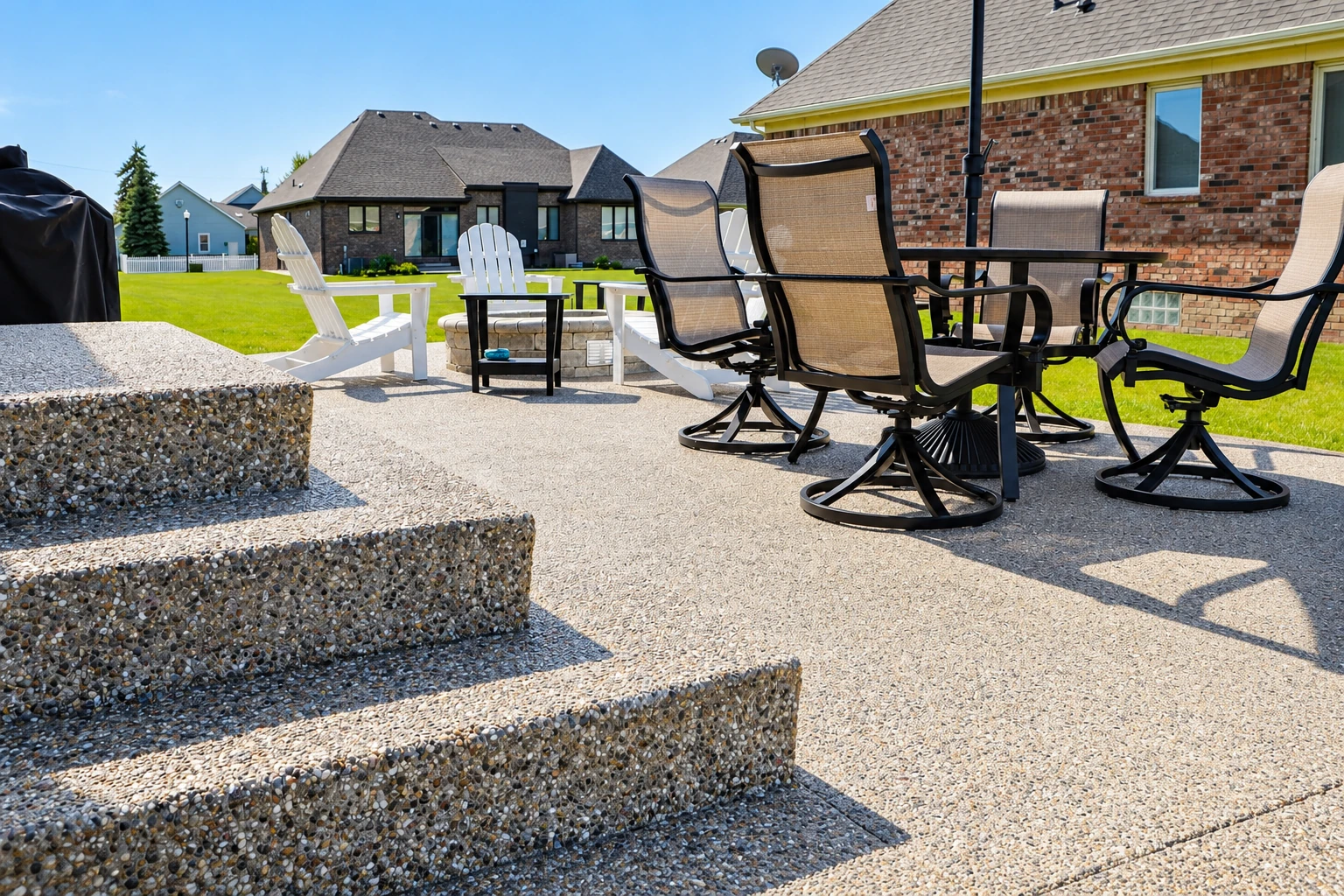
Backyards here get used most of the year, so we slope a new patio gently away from the house to keep rainwater out from under your walls.
Stamped concrete services
For a house where plain gray would look out of place, stamped concrete presses a stone or brick pattern into the surface while it's still soft.
Concrete sidewalk building
Front walks take years of foot traffic and root pressure, so we replace the lifted sections and match the new run to what stays, with no trip edge.
Garage floor concrete
Detached garages behind many homes here have thin, pitted floors, so we break them out, rebuild the base and pour a slab that sheds water toward the door.
Decorative concrete
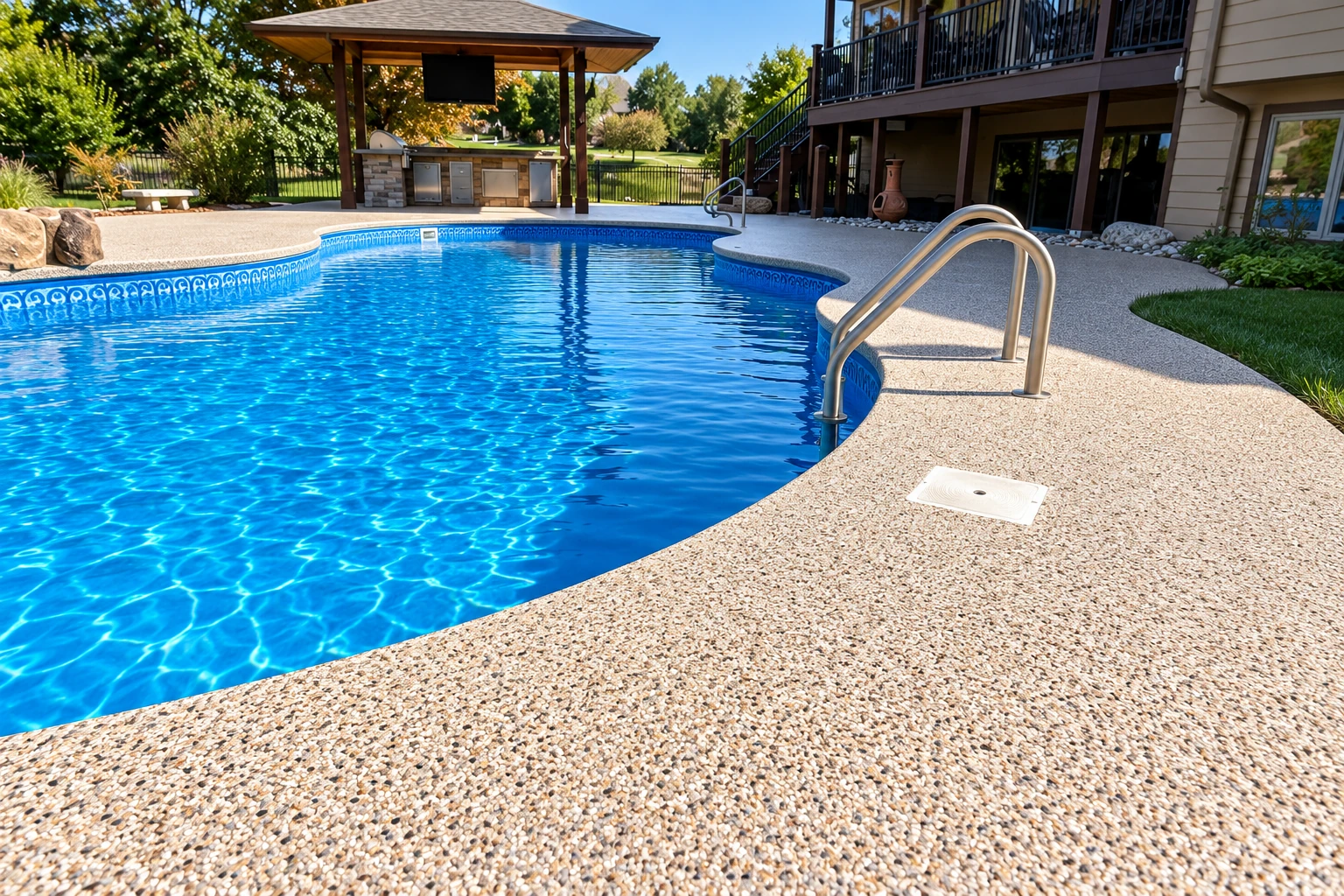
On a street of mixed older and newer homes, colored concrete or exposed aggregate lets a new slab suit your house. We'll bring samples to the estimate.
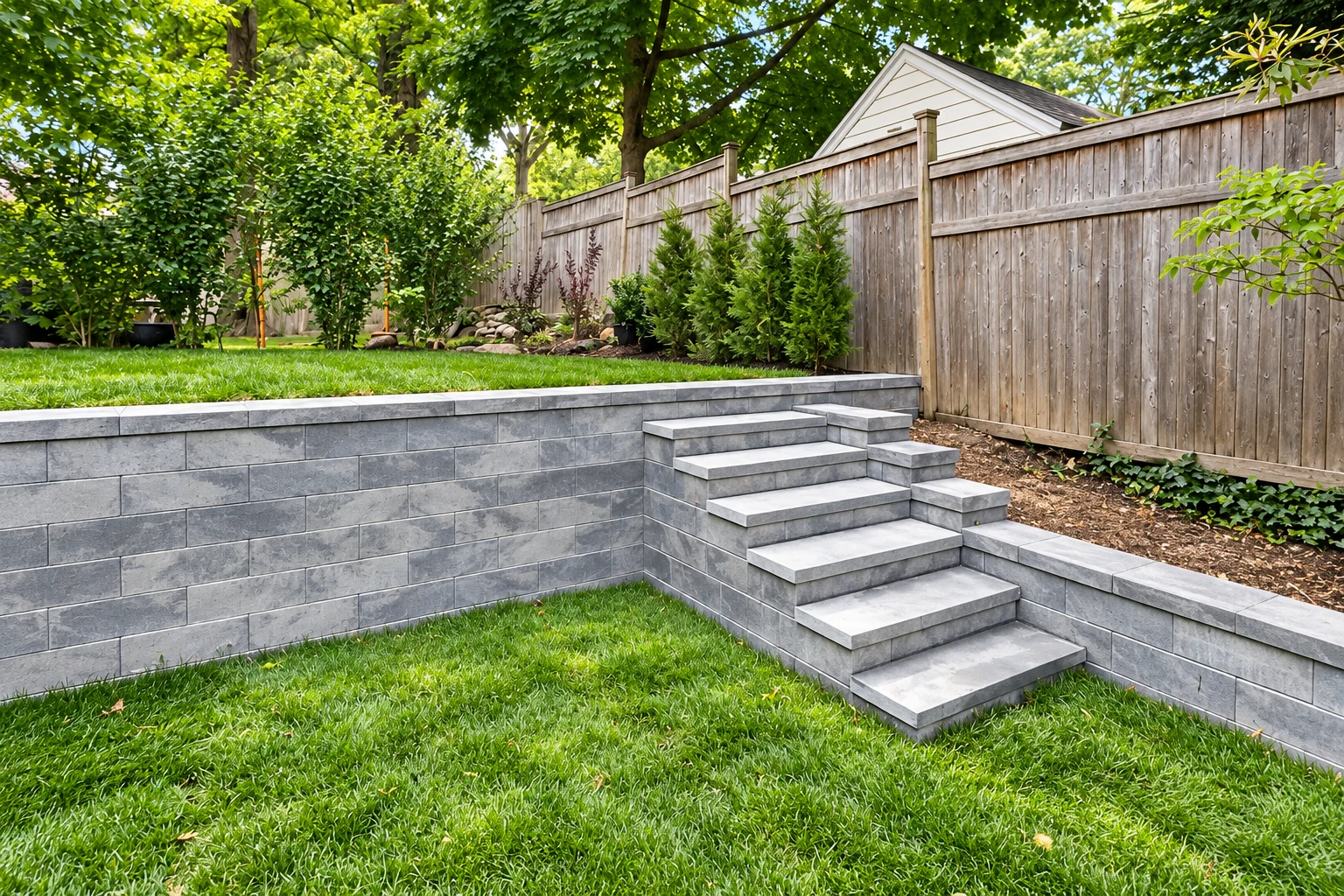
Concrete retaining walls
Lots here are mostly flat, so walls usually hold a raised bed or a step at the property line, and we plan drainage behind them before forming.
Concrete floor installation
When a house here gets an addition or a converted space, we pour the floor flat enough that your flooring goes down without shimming.
Concrete pool decks
Pool decks take sun, bare feet and splashing all summer, so we give them a textured finish for grip and slope them toward drains, not the pool.
Concrete steps construction
Front steps on older houses often pull away from the porch as they settle, so we rebuild them on a solid base with every step the same height.
Slab foundation building
A slab foundation for a backyard cottage or an addition starts with how the ground drains, then a packed base before any steel goes in.
Foundation installation
Some houses here need new foundation under part of the house, so we form each section to fit the framing above it, even in tight side yards.
Concrete parking lot building
For the small offices, shops and apartment buildings here, we pour lots and drive aisles thick enough for delivery trucks, with drainage planned so water doesn't pond.
Concrete footings
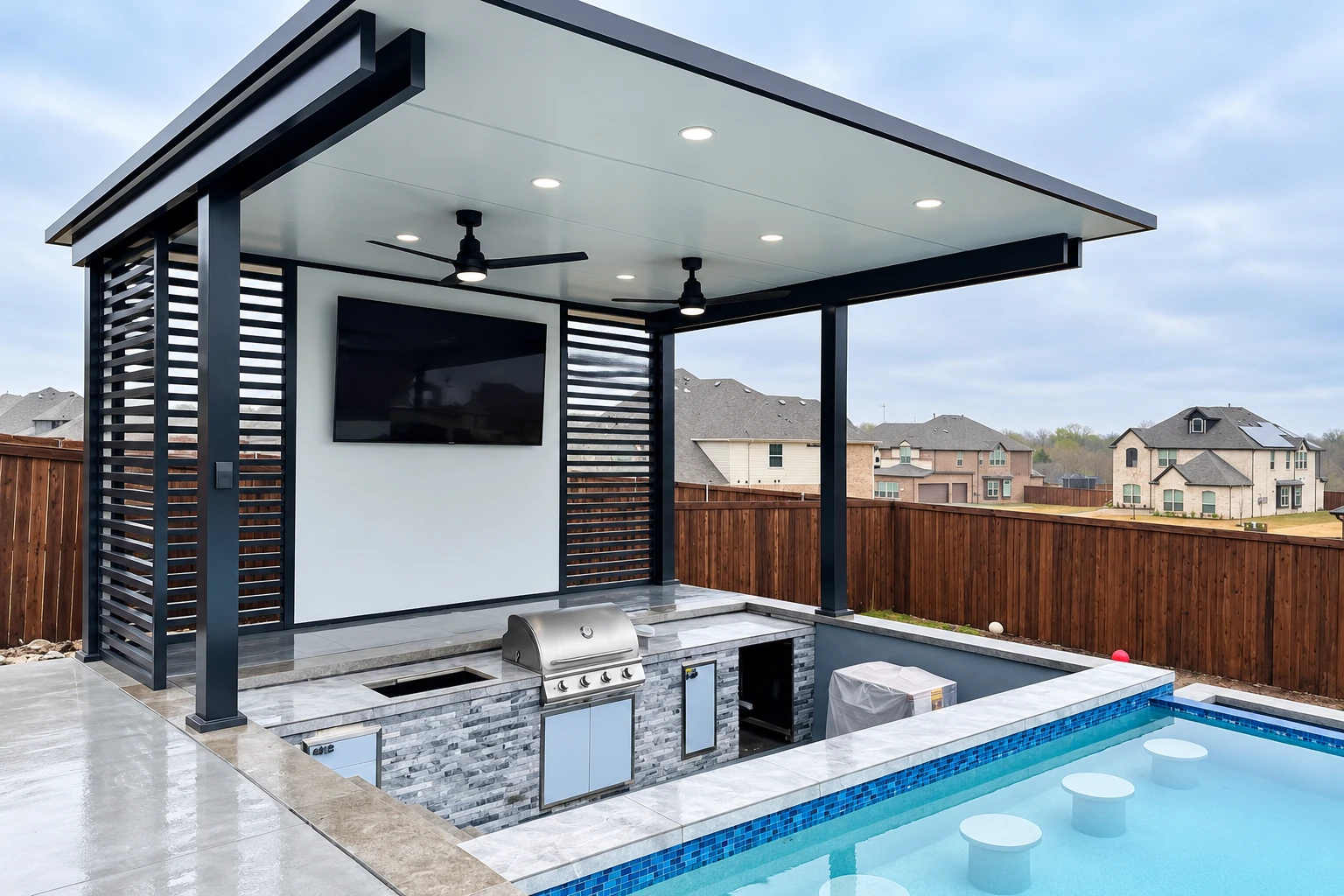
Patio covers, fences and garden walls need footings sized for their load, and where old roots crowd a lot, we dig by hand to work around them.
Foundation raising
When part of a house has settled and doors start sticking, we lift the low section back toward level and set it on new support.
Concrete cutting
Widening a driveway, running a drain line or adding a doorway usually means cutting into concrete, and we saw clean lines so the new work looks planned.
Is your Mountain View driveway or patio showing these signs?
Concrete here rarely fails all at once. On older lots, roots and settling soil show up first as small changes you can spot on a walk around the house.
- Cracks that keep getting wider
- Raised edges along the walk
- Water pooling after it rains
- Patio tilting toward the house
- Flaking, dusty or chipped surface
- Gaps where slab meets the house
If you see one of these, call or send the form, and I'll come take a look and tell you plainly what I think is going on.
Should you repair the slab or replace it?
On a Mountain View lot, the call usually comes down to what's under the concrete. A sound base can carry a repair, and a failed base usually pulls any new surface down with it.
The base is still sound
If the slab is still level and the cracks are narrow and not growing, we can cut out a damaged section or replace a single panel between joints. That keeps the good concrete and usually costs less than starting over.
The ground has moved
When the slab has sunk, tilts toward the house or keeps cracking in new places, the trouble is usually the base underneath. Patching the top won't fix that, so we take it out, rebuild the ground and pour new.
What Mountain View lots ask of concrete
I still answer the phone and walk each job myself, so the person who measures your yard is the one planning the work our own crew does.
Base before finish
If the budget's tight, I'd trim the finish before the base, since no top can save a slab that settles.
Joints cut on time
We cut control joints, shallow grooves that give a slab a planned place to crack, before the concrete picks its own spots.
Pours timed for warm days
Summer days here often reach the seventies and eighties, so we pour early, before the heat can leave a weak, dusty top.
Permits looked into first
We look into permits before we quote, and when your job needs one, we handle the application and meet the inspector.
Licensed in California, insured
We're fully licensed and insured, and the state requires a license on any job needing a permit or costing $1,000 or more.
Tell us about your Mountain View project
I answer the phone seven days a week from 6 AM to 11 PM, so you can call (650) 516-3703 after work and talk the job through.
Don't see your city? Just call
If another city here is yours, pick it to see its page. If yours isn't listed, call (650) 516-3703, since we work across the Peninsula and into the South Bay.